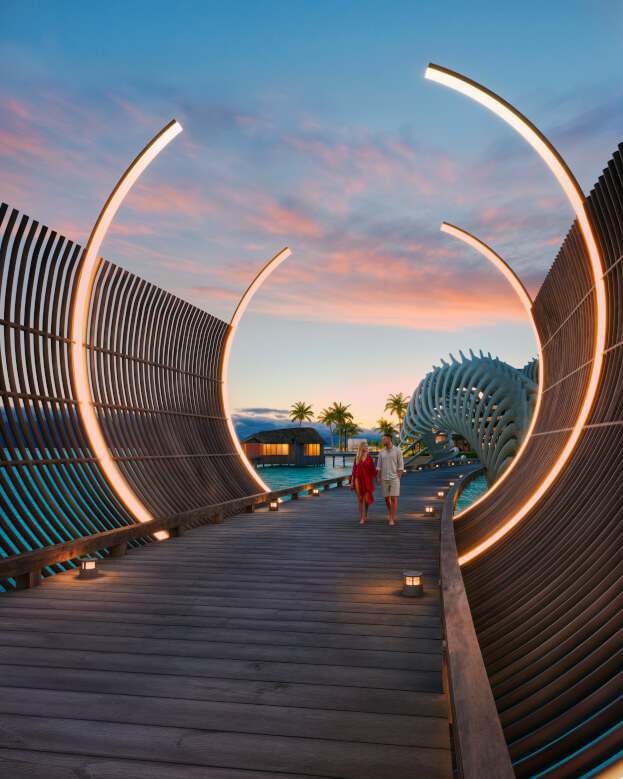
Imagining a Future Built First in the Mind
There are moments in technological history when a tool quietly transforms the way humanity imagines the world. Printing presses reshaped knowledge. Photography reshaped memory. Today, advanced 3D visualization may be reshaping imagination itself.
The idea behind modern visual marketing and spatial simulation suggests something more profound than simply showing a building before it exists. It proposes a subtle but radical theory: that cities, neighborhoods, and even entire lifestyles may increasingly be designed first as immersive experiences before they are ever constructed in reality.
Companies working in the field of high-end visualization — such as Visarteam, known for its sophisticated 3D renderings, animations, VR/AR environments, and interactive presentation systems — appear to be participating in the early stages of this transformation. Their work hints at a future where architecture is not only engineered but emotionally tested, socially evaluated, and culturally imagined inside digital worlds.
This raises an intriguing speculation: what if visual environments become the true birthplace of physical reality?
Visarteam empowers real estate professionals worldwide with state-of-the-art 3D visualizations, https://visarteam.com/ compelling marketing animations, immersive VR/AR content, and fully interactive project tools.
The Hypothesis of Pre-Lived Architecture
Urban theorists have long argued that cities reflect the dreams of their creators. But in the traditional process, those dreams were abstract sketches or technical blueprints. Today, immersive visualization technologies allow people to walk through spaces that have not yet been built.
This leads to a compelling hypothesis: future architecture might be pre-lived.
In such a scenario, developers, architects, and even future residents could explore a district in virtual reality years before construction begins. They might observe sunlight patterns through seasons, experience pedestrian flow, or feel the atmosphere of a public square during a simulated evening.
If a place feels uncomfortable, empty, or uninspiring, it can be redesigned before a single brick is placed. Entire urban experiences could be tested, refined, and emotionally optimized.
Within this speculative model, companies specializing in advanced visualization become more than service providers. They become mediators between imagination and reality.
Visual Marketing as Social Forecasting
Another theory emerges when examining the marketing side of visualization. Traditionally, marketing shows what already exists. But visual marketing in architecture often depicts something that does not yet exist.
This creates an unusual dynamic: the visualization is not only selling a project — it is shaping expectations about the future.
High-quality animations, interactive walkthroughs, and AR presentations allow potential buyers or investors to perceive a future lifestyle with surprising clarity. People are not merely evaluating a property; they are emotionally inhabiting a possibility.
From a sociological perspective, this might function as a form of social forecasting. By observing how audiences react to certain environments — modern urban courtyards, green rooftop communities, waterfront promenades — developers may discover which types of spaces resonate with emerging cultural values.
Visualization, therefore, becomes a kind of laboratory for future living.
The Utopian Possibility of Collaborative Cities
A particularly optimistic theory suggests that immersive visualization tools could democratize urban design.
Imagine a development project where thousands of future residents explore the proposed neighborhood in virtual reality. Through interactive tools they could suggest adjustments: more green spaces, pedestrian streets, community gardens, shared work hubs.
Artificial intelligence could analyze these collective responses and refine the design in real time.
In this utopian scenario, cities would no longer be designed solely by a small group of professionals. Instead, they would emerge through dialogue between architects, citizens, developers, and digital simulation platforms.
Visualization studios — particularly those experienced in VR, AR, and interactive design like Visarteam — could act as the translators of this dialogue, turning abstract feedback into visual environments everyone can understand.
The Dream Layer of Future Development
Perhaps the most fascinating speculation is philosophical rather than technological.
When a hyper-realistic 3D environment is created, it exists in a strange intermediate state. It is not purely imaginary, because it can be explored, measured, and experienced. Yet it is not real either, because it has not been physically built.
One might call this the dream layer of development.
Inside this layer, entire districts can exist temporarily as visions. Some will eventually materialize in concrete and glass. Others will disappear like forgotten dreams. But all of them influence how designers think about space and how societies imagine their future landscapes.
The role of advanced visualization studios becomes almost poetic in this context. They are not simply producing images; they are constructing the first version of tomorrow’s environments.
A Quiet Architectural Revolution
If these theories hold even partial truth, then the field of 3D visualization and visual marketing may represent the early stages of a quiet revolution in how humanity designs its world.
Before cities are built, they will be experienced.
Before neighborhoods exist, they will be explored.
Before architecture becomes reality, it will live — briefly but vividly — inside immersive digital imagination.
And perhaps the most intriguing possibility is this: the cities of the future may first appear not on Earth, but inside the carefully crafted virtual worlds created by visualization pioneers.